
If This Character Sat Across From Me
Dear Stressed-Out Woman,
I know you probably picked up your book because you wanted to get out of your own head for a little while.
Same.
I love getting lost in a good story, but somewhere along the way my therapist brain usually sneaks in too. I start noticing the perfectionism, the people-pleasing, the family roles, the relationship patterns, the grief, the burnout, and all the little ways a character is trying to hold herself together.
So this blog is where my love of books and my therapist brain meet.
I’ll tell you what I actually thought about what I’m reading, what made me laugh, what annoyed me, who I was rooting for, and the moments that made me want to yell at fictional people who absolutely cannot hear me.
Then I’ll ask the question I almost always end up asking anyway:
What if this character were sitting across from me?
What would I want to understand before giving advice? What might she believe about herself underneath the way she’s coping? If she were my client, what might we work on together?
And because fiction has a funny way of showing us pieces of ourselves, I’ll leave you with a few questions to think about too.
This is not me diagnosing fictional characters or turning your fun romance novel into homework. Promise.
It is just a place to talk about the very human things that keep showing up in the stories we love: anxiety, perfectionism, burnout, people-pleasing, relationships, grief, boundaries, family expectations, self-worth, and what happens when you have been the strong one for a little too long.
So come for the books. Stay for the therapist thoughts. And maybe, every once in a while, recognize a little bit of yourself in the character too.
From one recovering perfectionist to another,
Hayley
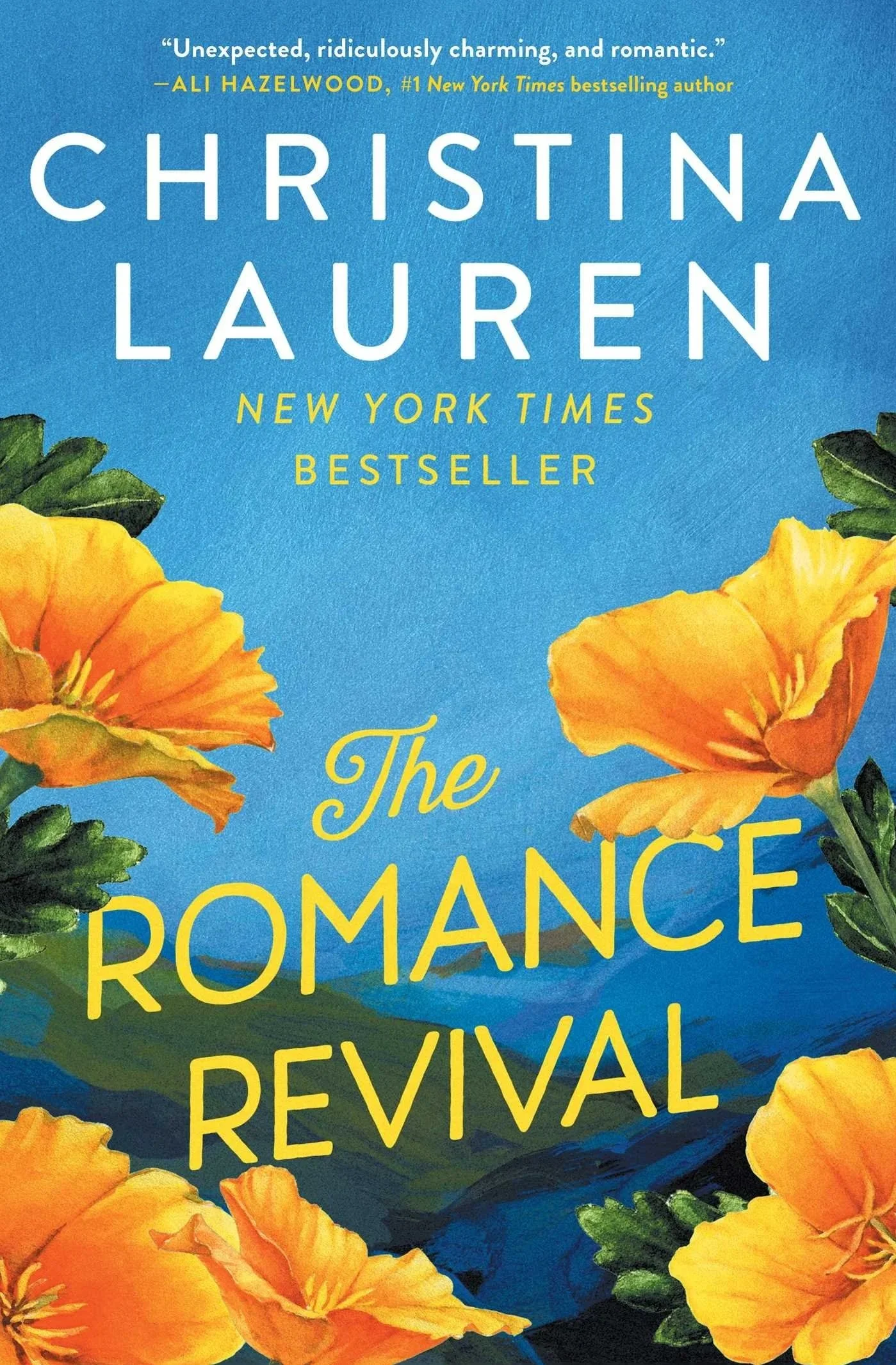
What The Romance Revival Gets Right About Control, Grief, and the Strong One
What happens when being capable, productive, and in control starts costing you the life and relationships you care about? My therapist brain had a lot to say while reading The Romance Revival by Christina Lauren.
A therapist’s take on The Romance Revival by Christina Lauren
Spoiler warning: This post discusses parts of The Romance Revival by Christina Lauren.
I enjoyed The Romance Revival. It did exactly what I wanted it to do: it got me out of my own head for a while. Anyone else have that goal when picking up their next read?
As a recovering perfectionist myself, I really saw Emery. I understood her struggle, even while I found myself getting frustrated on behalf of her husband, Luca. The Christina Lauren duo always does an amazing job of pulling me into their writing, and this book was no exception. I did get a little lost in some of the science and STEM conversations at first, but eventually I caught on. This old dog can learn new tricks! Ha.
I felt for Luca, but I also felt deeply for Emery. Who hasn’t poured themselves into the thing they know how to do because it feels like the one part of life they can control? At least, that is what it can feel like.
Sometimes we focus so hard on managing one part of our life that we do not notice what we are losing along the way. We may lose touch with ourselves, become less present in our relationships, or keep telling ourselves we will make room for the people we love once everything finally settles down.
That was the major theme I kept coming back to while reading Emery and Luca’s story:
Control can look a lot like competence from the outside.
Emery’s work gave her somewhere to put all of that energy and something she could actually do. But that focus also took something from her relationship with Luca.
If Emery Were Sitting Across From Me
I would not begin by telling her she needed better work-life balance. She already knew her work had taken over parts of her life. That was the obvious part.
Knowing what needs to change and understanding why you feel unable to change it are two very different things.
Instead, I would get curious with her about the beliefs underneath the overworking and need for control. Maybe they would sound something like:
“If I stay prepared, I can keep something terrible from happening again.”
“If I stop working, I may have to feel what I have been avoiding.”
“This work matters, so the people who love me should understand why it has to come first.”
“I can make up for my absence later.”
“If I am capable of fixing something, then it is my responsibility to fix it.”
“Once I solve this, then I can finally rest.”
These are not direct quotes from Emery. They are the kinds of beliefs I found myself wondering about as I read.
If Emery Were My Client
We might talk about why control feels safer than uncertainty and what staying busy protects her from feeling. I would also want to understand what makes it so hard to be present when there is still a problem to solve.
We could look at how she might own the impact on Luca without turning that into, “I ruin everything.” From there, we could get more specific about what showing up differently might actually look like.
The goal wouldn’t be to make her feel bad for caring so deeply about her work. It would be to understand why work had become the place where she felt most useful, capable, and in control, and what it was beginning to cost her.
A Question for You
Where are you telling yourself, “I’ll deal with this once everything calms down”?
And maybe the harder question:
Who gets your best energy, and who gets what is left?
You do not have to stop caring about your work, your goals, or the things that matter deeply to you. But you also do not have to wait for a crisis to start showing up for the life and relationships you already have.
If this brought up something familiar about overwork, control, or feeling like you have to keep everything together, it might be worth getting curious about why that pattern keeps showing up. Therapy can be a place to understand what the busyness has been protecting and what it may be costing you.
I offer virtual therapy for women in Oklahoma and Texas.
Schedule a Free Consultation